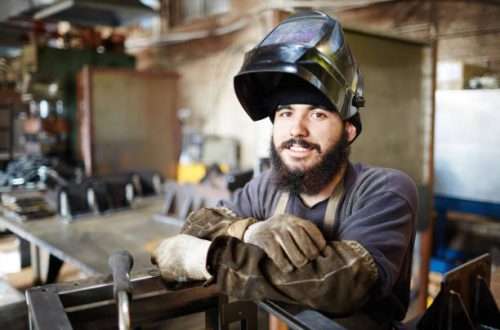
In welding operations, the welding helmet is almost the most worn and most closely contacted piece of protective equipment. However, in reality, many welders focus on the shading effect, automatic light adjustment speed, or price when choosing a helmet, but rarely seriously consider a deeper question: how will a welding helmet affect cervical spine health when welding operations last for hours or even years, and how will it subtly change a person’s concentration and operating state?
Neck discomfort, shoulder and neck pain, decreased concentration, and mental fatigue are common among welders, but are often mistakenly considered “normal reactions to being tired from work.” In fact, the weight, structure, and wearing method of the helmet, as well as the burden on the visual system, all accumulate during long hours of work, having a sustained impact on the body and brain. Understanding this is a crucial turning point for many welders, marking the transition from simply being able to “do the job” to being able to “do it long-term.”

I. Head posture during welding operations amplifies cervical spine pressure.
Welding is not a natural, standing, or relaxed working posture. To clearly see the weld seam, welders often need to bend their heads, lean forward, and even twist their necks for extended periods to match the angle of the workpiece. In this already less-than-ideal posture, the presence of a helmet directly amplifies the load on the cervical spine.
From a biomechanical perspective, the weight of the head itself exerts continuous pressure on the cervical spine. When the head tilts forward, the torque that the cervical spine needs to bear increases exponentially. If the helmet is unevenly heavy or the center of gravity is significantly forward, it means that the neck muscles must be in a state of tension for a long time to maintain head stability. In the short term, this tension may only cause fatigue, but in high-frequency welding operations, it can gradually develop into chronic strain.
Many welders don’t realize the root cause of the problem initially. They might only feel stiffness in their neck after get off work, which seems to return to normal after a night’s rest. However, as time goes on, the recovery slows down, the pain lasts longer, and they even feel discomfort when not working. This is often a sign of long-term improper stress on the cervical spine.
II. Differences in helmet weight, seemingly minor but with far-reaching consequences.
In the specifications of welding helmets , weight is often overlooked. A difference of a few hundred grams may not seem noticeable when held in the hand, but after wearing it continuously for two to three hours, this difference becomes very clear.
The impact of helmet weight on the cervical spine is not simply a matter of “heavier is always worse,” but rather depends on the reasonableness of weight distribution. Some inexpensive helmets, while not particularly heavy overall, have their center of gravity concentrated at the front of the visor. Welders, when looking down, need to constantly use their neck muscles to counteract the forward tilting torque. Well-designed helmets, on the other hand, distribute weight as evenly as possible across the head through their shell structure and headband system, minimizing the extra burden on the cervical spine.
Wearing a helmet with an unbalanced center of gravity for extended periods keeps the neck muscles in a constant state of tension. This continuous micro-load is very subtle, yet it easily leads to muscle tension and poor blood circulation, thus accelerating fatigue accumulation. When muscle fatigue reaches a certain level, welders often unconsciously change their posture to relieve discomfort, but this compensatory movement may actually put new pressure on other parts of the spine.
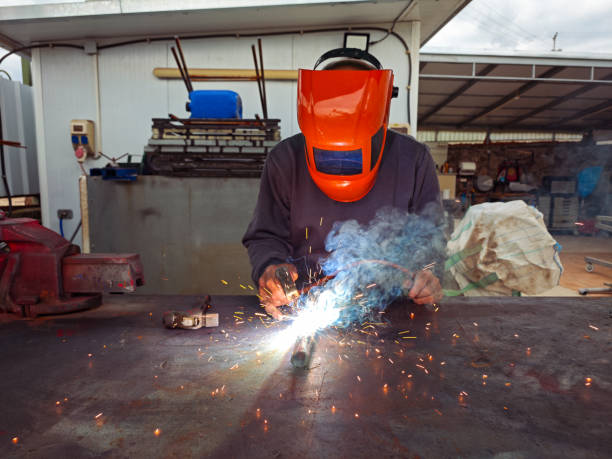
III. How Neck Fatigue Quietly Erodes Welding Concentration
Welding is an operation that highly relies on concentration. The stability of the weld, the control of the molten pool, and the mastery of the welding rhythm all require the welder to maintain a high degree of coordination between vision, hand movements, and brain judgment. Neck fatigue can unknowingly disrupt this coordination.
When neck muscles are under prolonged tension, the body prioritizes using its attentional resources to maintain postural stability. This unconscious “diversion” reduces the cognitive resources the brain can allocate for fine motor skills and judgment. Welders may find that as work hours lengthen, they become more easily distracted, their sensitivity to weld details decreases, and they may even make mistakes when they shouldn’t be so focused.
Furthermore, the cervical spine region is closely related to blood supply to the brain. Prolonged poor posture and muscle tension can affect local blood circulation, thereby impacting the brain’s oxygen supply. This often manifests as difficulty concentrating, slower reaction times, and increased mental fatigue. Welders might simply attribute this to “getting tired after working for a long time,” neglecting the deeper connection between the helmet and the cervical spine.
Fourth, the burden on the visual system is another hidden path to decreased concentration.
Welding helmets not only affect the cervical spine but also directly impact the welder’s visual experience. The burden on the visual system, in turn, affects concentration. Narrow field of vision, insufficient lens clarity, and color reproduction deviations may only cause temporary discomfort, but during prolonged welding operations, they significantly increase the brain’s processing load.
When welders need to constantly adjust their head angle to find a suitable field of vision, the strain on their cervical spine and visual fatigue accumulate. The brain not only has to process the welding operation itself but also constantly correct posture and visual input; this multitasking state easily leads to cognitive fatigue. Over time, a welder’s decreased concentration is not a matter of willpower, but rather a result of their body and sensory systems approaching their limits.
High-quality welding helmets are designed to provide a wider, clearer, and more stable field of vision, reducing the extra steps welders need to take to “see clearly.” This design doesn’t directly improve welding skills, but it provides a more conducive environment for concentration.
5. Helmet comfort determines how long concentration can be maintained.
During long welding sessions, comfort is not a luxury, but a key factor affecting the duration of concentration. Headband pressure, localized friction, and stuffiness caused by poor ventilation can all subconsciously erode a welder’s focus.
When the body feels unwell, the brain constantly receives feedback signals from the body. Even if these signals don’t translate into explicit pain, they can manifest as irritability or distraction. A welder might frequently adjust their helmet position or become distracted when they shouldn’t be; these subtle changes can affect welding quality and safety.
A well-designed helmet allows the wearer to “forget it’s there” after a while. This “unnoticeable wearing” state is a crucial prerequisite for maintaining focus for extended periods. It’s inconspicuous, yet an extremely valuable experience in high-frequency welding work.
VI. Long-term effects often only become apparent many years later.
Neck problems and decreased concentration don’t immediately appear within days or weeks of using a particular helmet. They are often the result of long-term accumulation, and by the time noticeable discomfort arises, the body has already endured a significant amount of repetitive stress.
Many experienced welders, when reflecting on their careers, find that early neglect of equipment comfort and ergonomics ultimately translates into cervical degeneration, chronic pain, or decreased work tolerance. This is not a matter of skill level, but rather a systemic effect of the long-term working environment on the body.
From this perspective, choosing a welding helmet is not only a tool decision for the current job, but also a choice for long-term health management. It determines whether a welder can maintain stable operating conditions and good concentration many years later.
VII. Understanding the impact of helmets is essential for making rational choices.
When we expand our focus from simple protective functions to cervical spine health and concentration maintenance, we discover that the value of a welding helmet goes far beyond simply “blocking light.” Weight, center of gravity, wearing structure, and field of vision design—these factors collectively constitute the physical experience of welders during long working hours.
Understanding these effects doesn’t mean everyone has to choose the most expensive helmet. It means being clear about the intensity of your work, the duration of your welding sessions, and how your body reacts. If welding is only an occasional activity, basic protection is sufficient. However, if welding is a high-frequency, long-term job, then the impact of a helmet on your cervical spine and concentration is not a minor issue that can be ignored.
A truly suitable welding helmet should strike a balance between safety, protection, comfort, and stability. Only when the physical burden is effectively controlled can the brain focus on the welding itself, which is a crucial prerequisite for consistently high-quality welding operations.
During prolonged welding sessions, the helmet is not merely a tool, but an integral part of the welder’s body system. Its impact on the cervical spine ultimately affects concentration and work performance. Understanding this is crucial for making truly rational decisions regarding equipment selection, and for ensuring a longer and more stable career in welding.