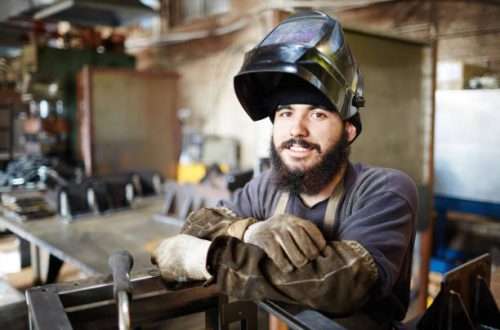
In the world of welding, safety helmets are practically a worker’s most intimate companion. However, many welders experience the same pain: neck soreness, stiff shoulders, and even dizziness after wearing them for extended periods. Consequently, renewed attention has been paid to the weight and ergonomic design of welding helmets —a seemingly simple issue that nonetheless impacts both work efficiency and health.
1. Weight isn’t just a number; it’s a burden on the body .
Traditional welding helmets are generally heavy. While their metal construction and thick protective layer provide adequate safety, they can also cause wearers to feel oppressive during extended periods of work. This is especially true when the helmet is tilted forward, placing the center of gravity on the forehead and neck, causing fatigue to accumulate more quickly. Today’s designers recognize that lightweighting isn’t simply about reducing weight; it’s about finding a balance between safety and comfort.
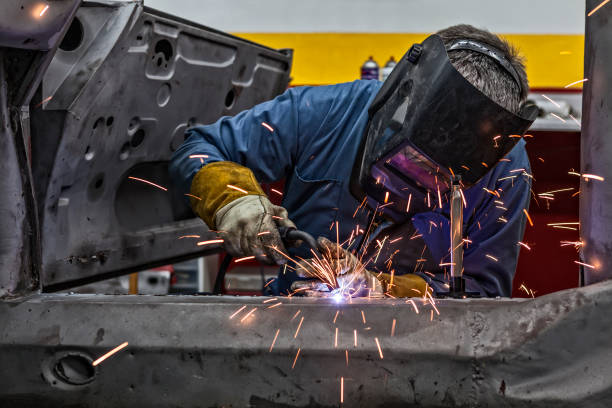
The use of lightweight materials has become a breakthrough. Polycarbonate (PC) and nylon composite materials offer excellent impact resistance while keeping overall weight within a reasonable range. Some high-end models even utilize carbon fiber structures, significantly reducing head pressure without sacrificing protection.
Second, the key to ergonomics: making the helmet “follow” your movements . A
truly comfortable welding helmet isn’t simply about being lightweight. It must work with the body’s natural movements when worn. A good helmet will distribute weight through a headband adjustment system, a counterbalance design, and a variable-angle structure. For example, a rear-positioned center of gravity design allows the helmet to fit naturally when flipped down, eliminating sudden stress on the neck.
The shape and material of the headband are equally important. A soft inner lining and multi-point support effectively reduce localized pressure, while an adjustable knob allows everyone to find the perfect fit for their head shape. These seemingly minor improvements are often the key to comfort.
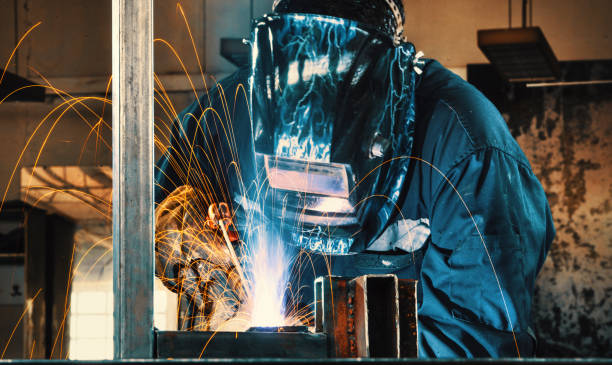
3. Details Determine the Experience: From the Flap to the Field of View. Smart
welders frequently raise and lower their helmets. Excessive resistance can cause repetitive strain on the neck. To address this, many brands have adopted low-friction hinges or center-of-gravity buffers to make each movement lighter and more natural. Furthermore, the position and angle of the field of view window can influence posture. A field of view that’s too low can force the welder to lean forward, while the right visual center height can reduce pressure on the cervical spine and promote a more relaxed welding posture.
4. Comfort is a long-term investment.
When many people first buy a helmet, they often focus on the filter speed and screen clarity, but ignore the wearing comfort. In fact, an ergonomic helmet can help welders stay focused during long work hours, reduce physical fatigue, and indirectly improve welding quality and safety.
the welding helmet isn’t just for comfort; it’s also about ensuring stability, precision, and safety with every movement. These invisible design considerations embody the humane nature of modern industry.