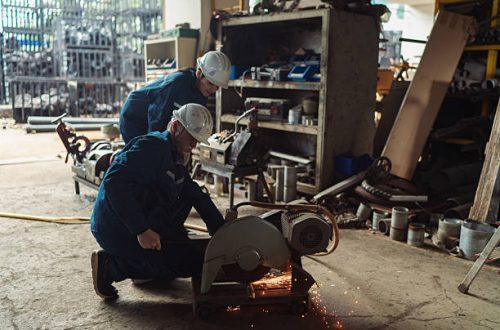
Many welding beginners believe that a welding helmet is a “universal piece of equipment.” Whether it’s electric welding, TIG welding, or MIG welding, as long as they wear a helmet to block out the strong light, they’re considered protected. However, as welding experience increases, many people gradually realize a problem: the same welding helmet can provide vastly different experiences depending on the welding process, sometimes even directly affecting welding quality and work safety.
Welding processes are not merely a matter of welding machines and welding materials; they also differ significantly in arc intensity, spectral distribution, arc initiation method, welding rhythm, and reliance on operator visual feedback. These differences ultimately translate into different requirements for welding helmets . Ignoring this can easily lead to situations where “the helmet is fine, but the weld is still poor.”
Understanding the requirements of different welding processes for welding helmets essentially means understanding the real working environment faced by the human eyes, neck, and brain during the welding process.
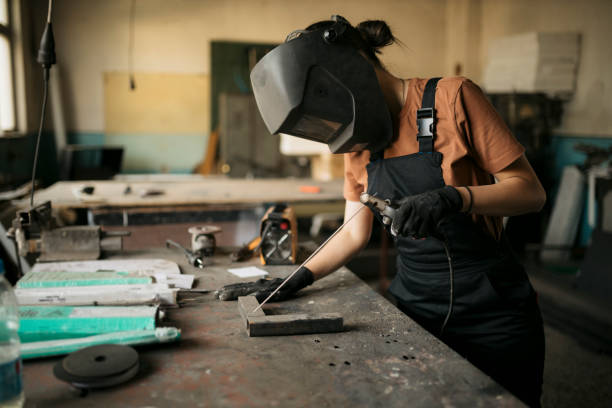
I. Differences in welding processes determine the different protective focuses of helmets.
All welding processes generate strong electric arcs, but the characteristics of these arcs differ. Some arcs are bright and stable, while others are frequently ignited and extinguished. Some require extremely high visual detail, while others prioritize efficiency and continuous operation. These differences determine that the performance characteristics of a welding helmet need to be emphasized differently depending on the welding process.
Using only “sun protection rating” as a single indicator to measure the suitability of a welding helmet often leads to misconceptions. What truly matters is whether, in a specific welding process, the helmet can protect the eyes while providing sufficient information feedback, allowing the welder to clearly judge the state of the molten pool, the direction of the weld, and the welding rhythm.
From this perspective, a welding helmet is not a universal tool, but rather a piece of equipment that needs to be matched with the welding process.
II. For manual arc welding, the requirements for stable protection are higher than those for visual precision.
Manual arc welding is the first welding process many people encounter. It is characterized by a high arc brightness, strong light stimulation, and frequent arc initiation and extinguishing, making it highly dependent on the operator’s experience. For this process, the most crucial requirement for a welding helmet is stable and reliable protective capability.
Because the brightness of the electric arc is extremely high at the moment of arc ignition, any delay in protection from the helmet at this step will cause significant eye irritation. Therefore, whether it is a helmet with a fixed filter or an automatic light-changing helmet, in manual arc welding, the certainty of protection is often more important than “advanced features”.
For helmets with automatic light-adjusting mechanisms, light-sensing stability and anti-interference capabilities are particularly critical. Arc flicker and splatter reflections, common in manual arc welding, can interfere with the light-sensing system. If the helmet frequently misjudges light under these complex lighting conditions, it will severely impact the welder’s sense of safety and confidence.
In this process, the welder has relatively limited reliance on the details of the molten pool, so the requirements for clarity and color reproduction in helmets are not as stringent as some precision welding processes.
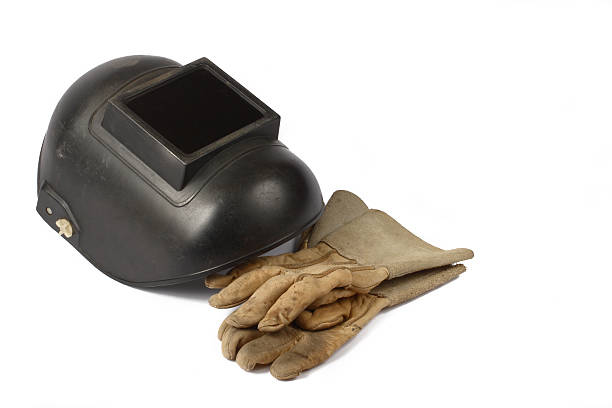
Third, carbon dioxide shielded welding places greater emphasis on comfort and stability during long-term operation.
Carbon dioxide shielded welding is typically characterized by high welding speed and strong continuity, requiring welders to maintain a stable welding state for extended periods. Under this process, the impact of welding helmets on the cervical spine and wearing comfort is significantly amplified.
Continuous welding means wearing a helmet for extended periods with minimal changes in head posture. If the helmet’s weight distribution is unbalanced, neck fatigue can easily occur towards the end of the welding process, thus affecting welding stability. Compared to manual arc welding, MIG welding places higher demands on the ergonomics of the helmet.
Furthermore, the weld formation and molten pool condition of MIG/MAG welding require continuous observation by the welder. The clarity of the helmet visor, the field of vision, and the visual comfort after light adjustment all directly affect the welder’s judgment of the weld quality. If the visor has obvious color cast or visual pressure, the welder is more likely to experience a decline in concentration during long working hours.
Therefore, in CO2 shielded welding, the welding helmet is not only a protective tool, but also an auxiliary device that affects welding efficiency and stability.
IV. Argon arc welding places higher demands on visual feedback.
Argon arc welding is a process that demands extremely high operational precision and welding detail. Welders need to clearly see the edge of the molten pool, the state of the welding wire, and changes in the weld bead. Under this process, the impact of the welding helmet on the vision system is often more easily perceived than the protection itself.
Argon arc welding produces a relatively concentrated arc, resulting in high brightness, but it places greater emphasis on stability. This means that welders often spend extended periods focusing on the same spot for fine-tuning during the welding process. If the helmet visor lacks clarity or has distorted color reproduction, welders are prone to making mistakes in judging details.
The performance of an automatic light-adjustable helmet is particularly crucial in TIG welding. Insufficient light sensitivity may prevent the helmet from dimming in time during low-current welding; while excessive sensitivity may cause frequent flickering when ambient light changes, interfering with the welder’s vision. This unstable experience is fatal for TIG welding.
welding helmets suitable for argon arc welding often require more design investment in terms of photosensitive accuracy, uniformity of light variation, and visual comfort.
V. Refined welding techniques transform the helmet into a “visual tool”.
In some precision welding processes, such as thin plate welding, stainless steel welding, or high-requirement decorative welding, welders have extremely high requirements for the appearance of the weld and the control of the molten pool. In these cases, the role of the welding helmet has changed from simple protective equipment to a “visual tool”.
In these scenarios, welders need to judge the welding status through extremely subtle visual changes. The uniformity of light transmission, the naturalness of color, and the continuity of vision of the helmet visor all directly affect the welding result. If the visor has problems such as dark corners, color blocks, or inconsistent clarity, the welder will unconsciously adjust the angle of his head, increasing the burden on his cervical spine.
This is why some high-end welding helmets are highly regarded among professional welders, but seem “nothing special” to beginners. Their value lies more in the stable experience during long-term, high-precision operations.
VI. Multiple process switching places demands on the helmet’s adjustability.
In practice, many welders do not use only one welding technique but need to switch frequently between different techniques. In this case, the adjustability of the welding helmet becomes particularly important.
Whether the shading level adjustment range is sufficient, whether the light sensitivity is controllable, and whether the delay time can adapt to different arc characteristics—these factors all affect the helmet’s adaptability to various process environments. If the helmet only performs well under a certain process, then when switching processes, welders will either have to endure discomfort or be forced to change their equipment.
Higher-priced, well-designed welding helmets often demonstrate their value by enhancing this “cross-process adaptability”.
VII. Understanding the differences is key to choosing the right helmet, not just the most expensive one.
welding helmets vary depending on the welding process , not simply a matter of higher or lower standards, but rather a difference in emphasis. Manual arc welding prioritizes definitive protection, CO2 shielded welding emphasizes long-term comfort, while argon arc welding and precision welding place higher demands on visual appeal.
If you don’t understand these differences and choose a helmet solely based on price or specifications, you’re likely to end up spending money on a helmet that doesn’t fit. A truly rational choice involves understanding your welding techniques and the intensity of your work, and selecting a helmet that best matches your key performance characteristics.
A welding helmet isn’t necessarily better the more expensive it is; the best helmet is the one that’s most suitable. When the helmet’s performance is well-matched to the welding process, the welder not only receives better safety protection but also maintains greater focus and stability during operation.
Conclusion: Welding process determines the true value of a helmet.
a welding helmet is never just reflected in its specifications or price tag, but in the real-world experience it provides for specific welding processes. Different welding processes have different requirements for visibility, protection, comfort, and stability, and the helmet serves as a crucial link between the welder and the welding process.
Understanding these differences is a crucial step for welders to move from simply “knowing how to weld” to “welding for longer and more consistently.” Only when welding helmets truly serve the welding process itself, rather than becoming a burden, can welding achieve a better balance between safety and efficiency.