In the world of welding tools, the welding helmet is often the most underestimated piece of equipment. When many people first encounter welding, their attention is almost entirely focused on the welding machine, the current, the welding rod, or the welding wire, while the welding helmet is often seen as an accessory that “just blocks the light.” Because of this, when people first enter a welding supply store or open an e-commerce platform and see welding helmets ranging in price from tens to thousands of yuan, they are often deeply confused.
From the outside, they all look like a shell that covers the face, and the lenses are also dark, so why can the prices differ by tens of times? Are expensive welding helmets really worth the price, or is it just brand premium? Are cheap welding helmets necessarily unsafe? These are questions that almost every welding novice asks, and even many experienced welders may not be able to explain them clearly in a systematic way.
To truly understand the price differences in welding helmets , we must move beyond the superficial understanding of “blocking light” and re-examine this seemingly simple yet highly technical protective equipment by considering the injury mechanism of welding arcs, the complexity of protective technology, the comfort and stability of long-term use, and the real needs of professional welding scenarios.
I. The root cause of the price difference lies in the welding arc itself.
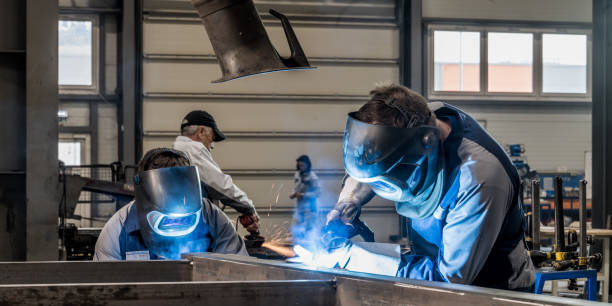
The reason welding helmets exist is that the harm caused by welding arcs to the human body goes far beyond just eye glare. Welding light contains intense visible light, ultraviolet radiation, and infrared radiation; these three combined pose multiple threats to the eyes and facial skin. More expensive welding helmets don’t necessarily offer “greater blackout,” but rather provide more stable, comprehensive, and controllable protection in more complex optical environments.
Low-priced welding helmets typically use the most basic fixed dark-colored light filter. The principle behind this filter is very simple: it uses permanently dark-colored glass or plastic to reduce the intensity of light entering the eyes. While it does reduce glare to some extent, its ability to filter ultraviolet and infrared rays doesn’t entirely depend on the material structure, but rather on thickness and color. This is why these welding helmets often have vague specifications, only emphasizing that they “work,” and rarely detailing their spectral protection capabilities.
Higher-priced welding helmets are designed from the outset to protect against the electromagnetic spectrum. They consider not only brightness but also the long-term damage that different wavelengths of energy can cause to the cornea, lens, and retina. A large portion of the price you pay is for this “invisible but real” protective capability.
where does the money for a basic Welding Helmet go?
When the price of a welding helmet increases from tens of yuan to hundreds of yuan, the change is usually not in the outer shell design, but in the internal structure and materials. This price range often marks the transition from “usable” to “relatively safe and relatively comfortable”.
At this level, the most noticeable upgrade is in the quality of the filters. While still using fixed dark lenses, the materials are transitioning from ordinary tinted plastics to multi-layered composite filter materials. Such lenses are more stable in blocking ultraviolet and infrared rays, and even with changes in visible light intensity, there are no significant gaps in protection.
Furthermore, the helmet’s structural design will be more rational. Low-priced welding helmets often neglect wearing stability, focusing only on whether they can be hung on the head, while slightly higher-end products will consider weight distribution, headband adjustment range, and the pressure felt during prolonged wear. These seemingly insignificant details directly affect whether welders are willing to wear the helmet correctly for extended periods.
At this price point, you’re not paying for “advanced features,” but rather a safety net of basic reliability and a good user experience. These features may not necessarily make soldering more efficient, but they do reduce significant risks.
III. Why did prices of automatic light-adjustable helmets skyrocket after their introduction?
What truly caused the dramatic price difference in welding helmets was the widespread adoption of automatic dimming technology. Automatic dimming welding helmets are not simply “added electronic components,” but rather incorporate a complete optical sensing and response system.
The core of an automatic light-adjustable helmet lies in the coordinated operation of a photosensor, a liquid crystal filter layer, and a control circuit. When the electric arc has not yet ignited, the lens is in a relatively light-transmitting state, allowing the welder to clearly see the workpiece. Once the arc is generated, the sensor detects the change in light intensity in a very short time and controls the liquid crystal layer to instantly darken, thereby protecting the eyes from the impact of strong light.
In lower-priced automatic light-adjustable helmets, this system often suffers from slow response times, limited sensing angles, and misjudgments in complex lighting environments. These problems don’t necessarily occur every time, but when they do, it means the welder’s eyes are exposed to a strong electric arc for milliseconds. It is precisely this instability that limits these systems to the entry-level price range.
The high-priced automatic light-changing helmets represent a significant investment in this system. Faster response times, more sensitive sensors, a more stable liquid crystal layer, and more mature algorithms are all direct reasons for the price increase. The value of these investments lies not in making it look “cooler,” but in reducing the probability of accidental exposure in real welding environments.
IV. Behind the parameter tables, what truly differentiates us is not the numbers.
Many consumers are easily misled by the specifications when choosing a welding helmet . Response time, light shielding level, number of sensors—it seems that as long as the numbers are similar, the user experience won’t be much different. However, in actual use, the real differences often lie in the parts that aren’t clearly stated behind the specifications.
For example, response time, even with the same nominal value, can exhibit drastically different performance in low-temperature, high-humidity, or frequently intermittent arcing environments. Similarly, the number of sensors doesn’t necessarily equate to quality; an improper sensor layout can create blind spots at certain angles.
Higher-priced welding helmets tend to perform more stably in these “edge scenarios.” Their development focus is not on meeting laboratory testing requirements, but on adapting to the unpredictable changes in real welding environments. This stability is difficult to demonstrate through readily observable parameters, but it is precisely why professional welders are willing to pay a premium.
Fifth, comfort and long-term health are the most easily overlooked aspects of price differences.
A welding helmet is not a piece of equipment to be worn for a few minutes. For frequent welders, it often needs to be worn continuously for hours, even becoming an extension of the body. Higher-priced welding helmets often invest far more in comfort design than beginners might imagine.
Even minor differences in helmet weight can be amplified into cervical spine pressure and muscle fatigue after prolonged wear. Differences in the internal padding material directly affect comfort and stability after sweating. The flip-up design, field of vision, and visor clarity all accumulate over time, ultimately impacting the welder’s physical condition and work efficiency.
In the short term, these differences may seem unrelated to welding quality, but in the long term, they directly affect whether a welder can maintain good posture, a stable line of sight, and sufficient concentration. A high-priced welding helmet is often a price paid for this long-term health.
VI. Beyond brand premium, where it’s truly worthwhile to spend money
Undeniably, brand premiums do exist in the welding helmet market. However, simply attributing high prices to “expensive brands” often overlooks the fact that established brands typically possess more comprehensive testing systems, stricter quality control, and more consistent product quality.
Welding helmets are not disposable items; their reliability needs to be verified through countless cycles of arcing, arc extinguishing, and changes in intense light. A brand’s value largely lies in this stability—a stability that you “don’t feel when it malfunctions.”
Of course, this doesn’t mean that a higher price necessarily means it’s more suitable for everyone. The key is to understand your usage scenario. If you only do occasional simple welding, a basic or entry-level automatic dimming helmet is sufficient. If you’re doing high-frequency, long-duration welding work that requires high precision, then a more expensive helmet may not be a luxury, but a necessary investment.
7. Understanding price differences is essentially about understanding your own needs.
in welding helmets are not the result of market chaos, but rather a natural reflection of the segmentation of different usage needs. From the most basic glare protection to stable spectral protection, and then to intelligent features, comfort, and long-term health assurance, each price range corresponds to a clear but often overlooked set of values.
When you hesitate over the price of a welding helmet , the real question you need to ask isn’t “Why is it so expensive?” but rather “Do I need the protection it provides?” Understanding this will prevent you from being misled by the specifications and from realizing the high price you paid for saving money only after you’ve actually been injured.
A welding helmet is never just a shell to block out the light; it’s the piece of equipment closest to the body and most directly involved in safety protection during the welding process. Behind the price differences lie different perceptions of risk and different judgments about the value of one’s own health.