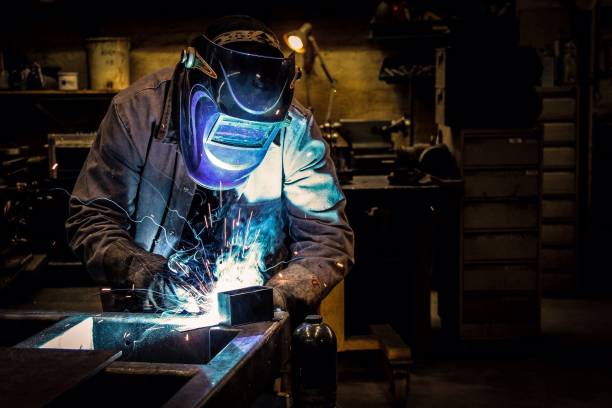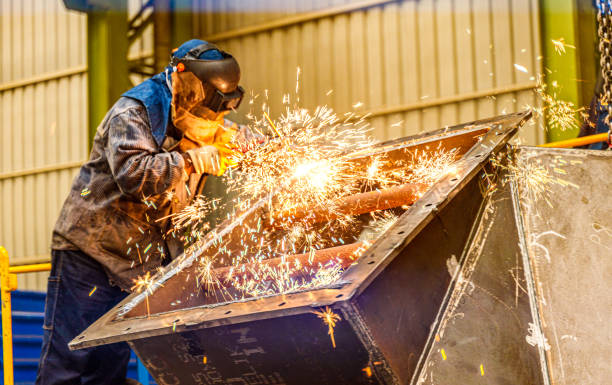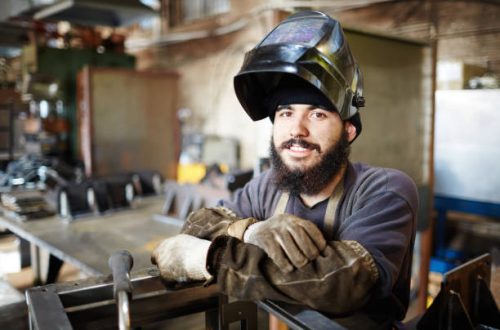
As welding technology advances, high-end welding helmets are becoming increasingly intelligent, featuring features like auto-dimming, lightweight designs, impact-resistant materials, Bluetooth connectivity, and even augmented reality (AR) displays. These premium helmets are often significantly more expensive than standard models, but are they worth the investment? This article analyzes the performance and value of high-end welding helmets , focusing on safety, comfort, lifespan, and cost-effectiveness, to help welders make an informed choice.
1. Advantages of safety performance
High-grade protection
high-end helmets usually use DIN13 grade lenses or above, which have stronger protection against ultraviolet rays and infrared rays and are suitable for long-term, high-intensity work.
impact-resistant
composite materials or engineering plastics have better impact resistance and can effectively resist welding sparks, spatter and high temperature, reducing the risk of accidental injury.
High-precision automatic dimming
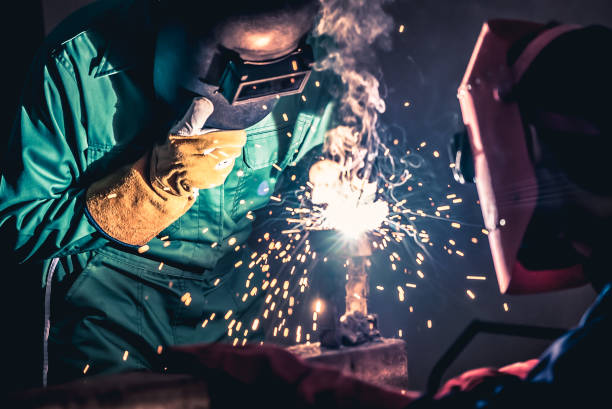
High-end automatic dimming helmets can switch at a speed of up to 1/25,000 second. When the arc light changes instantly, the eyes are almost unaffected, reducing eye fatigue.
2. Improved comfort experience
Lightweight design
High-end helmets use carbon fiber or composite materials, which are light and evenly distributed, and will not cause neck pain even if worn for a long time.
Adjustable headband and fit
The helmet headband can be fine-tuned to fit the head shape, making it more stable and comfortable to wear and reducing sliding and deviation problems.
Anti-fog and optimized ventilation
High-end models usually have advanced ventilation design and anti-fog lenses, so welders can still maintain clear vision in high temperature environments.
3. Functional Diversification and Intelligence
Multi-level darkness and delay adjustment
Users can freely set darkness and delay according to different welding methods to meet the needs of multiple scenarios such as MIG, TIG, and electric welding.
with additional intelligent functions
have built-in Bluetooth, AR display or operation data recording functions, which can assist welders in their operations and improve efficiency and accuracy.
Lenses and parts are easy to replace.
The lenses and accessories of high-end helmets are mostly modular in design, which makes replacement easy and extends the overall service life.
4. Cost and Cost-Effectiveness Analysis
The initial investment is high.
High-end helmets are generally 2-5 times the price of ordinary models, and the short-term investment is large.
Long-term value:
Higher durability and safety performance, reducing additional costs caused by helmet damage or eye injuries.
Improve work efficiency,
comfort and functionality to improve welding efficiency, reduce fatigue and operating errors, and indirectly save time costs.
Applicable people
Professional welders : A high-end helmet is a clear investment that improves safety and efficiency.
Amateurs/beginners : You can choose mid-to-high-end cost-effective models to ensure basic safety.
5. Purchase Recommendations
The decision to invest in a high-end helmet depends on the intensity and frequency of your work.
Pay attention to the helmet certification and protection level to ensure safety.
If your budget allows, you can give priority to models with complete functions and high comfort, which will be more cost-effective in the long run.
Conclusion
A high-end welding helmet isn’t a luxury; it’s an investment in safety and efficiency. For welders who work frequently or demand the highest levels of comfort and precision, its value far outweighs the initial cost. By carefully assessing their needs and budget, every welder can find the welding helmet that best suits them , achieving the optimal balance between safety and efficiency.