In welding operations, the welding helmet is the most direct protective barrier between the welder and the electric arc, and the lens within it is the core of safety protection and operational experience. Many welders only consider replacing it when the lens is visibly damaged, cracked, or no longer provides adequate light shielding. However, this “replace only when it breaks” mentality poses a significant safety hazard. The protective capability and visual clarity of the lens do not remain permanently unchanged simply because it appears intact. Prolonged use and various environmental factors will subtly weaken its performance, gradually affecting the welder’s visual safety and operational precision.
Understanding the lifespan of welding helmet lenses, recognizing early signs of performance degradation, and developing a scientific replacement strategy are essential tasks for every welder. This article will comprehensively analyze the use and replacement logic of welding helmet lenses from multiple dimensions, including lens material characteristics, usage environment, manufacturing process differences, performance degradation patterns, and replacement recommendations.
I. The core function of welding helmet lenses
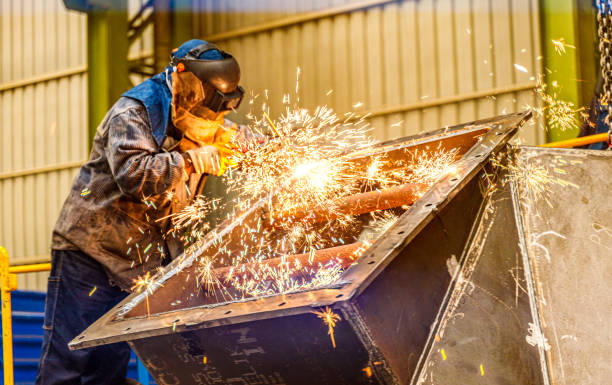
A welding helmet visor is more than just a piece of dark glass or plastic; it serves to block harmful light, ultraviolet (UV) radiation, and infrared rays. During welding, the electric arc generates an extremely complex spectrum, including visible light, UV radiation, and infrared radiation, each of which can cause short-term or long-term damage to the eyes. UV radiation can cause keratitis, infrared radiation can cause thermal damage to the lens, and excessive visible light can directly lead to glare and eye strain.
The visor plays a crucial role in the protective chain. Even with a robust helmet shell design, a degraded visor will significantly reduce protective effectiveness. Therefore, the good condition of the visor is not only related to comfort but also to the occupational health of welders.
II. Differences in lifespan due to lens material
Different types of welding helmets use significantly different materials for their lenses. Low-priced helmets often use ordinary tinted plastic or glass, which has limited hardness and scratch resistance, while high-end helmets use multi-layer composite materials or liquid crystal auto-dimming lenses, which, in addition to dark shading, also provide stable protection against ultraviolet and infrared rays.
After repeated soldering, ordinary tinted lenses may develop micro-scratches or material aging on their surface, leading to uneven light transmission and reduced protective capabilities. Auto-dimming lenses, on the other hand, work collaboratively between the circuitry, liquid crystal layer, and photosensitive element. Prolonged, high-intensity use can cause increased liquid crystal response delay, decreased photosensitivity, and even uneven brightness. These changes may not be visually obvious, but they already indicate impaired lens protection and visual performance.
The durability of the lens material directly determines its lifespan. Therefore, even if the lens is not broken or obviously damaged, its performance needs to be evaluated regularly.
III. The Impact of the Usage Environment on Lens Lifespan
The impact of the welding environment on lens lifespan cannot be ignored. High temperature, high humidity, dust, spatter, and ultraviolet and infrared radiation near the arc all accelerate lens aging. For example, prolonged welding in a high-temperature environment may cause plastic lenses to bend slightly or develop micro-cracks on the surface, affecting the uniform transmission of light; in workshops rich in dust and welding slag, the lens surface is easily abraded, leading to decreased visibility.
Furthermore, different welding processes result in varying degrees of wear and tear on the lenses. Manual arc welding involves high flash frequencies, repeatedly impacting the optical system; MIG welding involves continuous welding over long periods, requiring the lens to operate stably in a high-brightness environment for extended periods; and precision argon arc welding demands extremely high standards for color reproduction and light transmission uniformity. These process differences mean that the “usage load” on the lenses differs, and the lifespan of the same model of lens can vary by more than double under different processes.
IV. Early Signs of Decreased Lens Performance
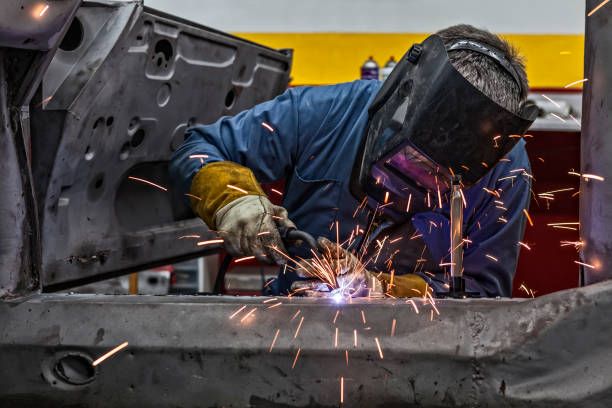
Lens performance degradation doesn’t always come with obvious damage; many changes are gradual and insidious. First, light transmission uniformity may begin to be affected, and welders may notice inconsistent brightness when observing the molten pool, with areas potentially showing dark corners or color shifts. Second, the response speed of the liquid crystal auto-dimming lens may gradually slow down, causing brief glare at the moment of arc initiation, subjecting the eyes to high-intensity light stimulation. Other subtle signs, such as fine scratches or microbubbles on the lens surface, can also affect visual clarity.
For regular fixed lenses, even minor scratches or coating aging, though not visible to the naked eye, may indicate a decrease in their ability to block ultraviolet and infrared rays. This means the eyes have already been exposed to potential damage over a long period. Timely detection of these early signs is crucial to preventing vision impairment.
V. Recommendations for Replacement Cycles of Different Types of Lenses
The replacement cycle for lenses varies significantly depending on the material type, welding process, and frequency of use. For regular fixed-focus lenses, under frequent use, it is recommended to replace them every six months to a year, even without obvious damage. For auto-dimming lenses, under high-intensity use, it is generally recommended to replace them about once a year, but this can be shortened to six months in special high-frequency welding scenarios. For low-frequency work or amateur welders, the lens lifespan can be appropriately extended, but changes in optical performance should still be monitored.
The replacement cycle depends not only on time, but also on the intensity of use and environmental factors. For example, in environments with high temperature, high humidity, and high dust, lens aging accelerates, and even with minimal use over six months, optical performance may decline.
VI. How to scientifically determine whether lenses need to be replaced
Determining whether lenses need replacement scientifically does not rely solely on visual inspection. It can be assessed from the following aspects: observe the uniformity of light transmission, whether there is brief glare or uneven brightness during arc initiation; check the surface for minor scratches, bubbles, or coating peeling; experience whether the visibility of the molten pool decreases during welding, and whether the color is natural; for auto-dimming lenses, also pay attention to whether the response speed is significantly delayed or flickering is unstable.
These practical feedbacks can help determine whether the lens has lost its original protective effect. Even if the lens is not broken or appears intact, it may still pose a potential danger due to these performance degradations.
VII. The Importance of Lens Replacement and Long-Term Occupational Health
Regularly replacing welding helmet lenses is not just for comfort, but also a long-term investment in protecting welders’ eyesight. Prolonged exposure to lenses with weakened protection can lead to problems such as keratitis, macular damage, and thermal damage to the lens. These damages may not be immediately apparent but can accumulate gradually over several years.
For welders, especially those in high-frequency work environments, timely replacement of contact lenses is crucial to occupational health. Rather than saving the cost of a single lens, avoiding medical expenses and decreased work efficiency due to vision impairment is far more practically important.
VIII. Strategies for Lens Replacement in Practice
In practice, welders can develop a lens replacement strategy based on their daily work. First, maintain usage records and plan regular replacement cycles according to welding processes and work frequency. Second, periodically check lens performance by observing light transmission uniformity, welding experience, and surface condition to identify potential problems early. Finally, in multi-process environments, consider equipping different types of lenses or helmets for different welding processes to extend the lifespan of individual lenses while ensuring operational safety.
By establishing scientific strategies, welders can improve work efficiency while ensuring protective performance and reducing the risk of accidents caused by deterioration in lens performance.
IX. Conclusion: Lenses are not replaced only when they break; their protection remains consistent throughout.
welding helmet visors should not be based solely on visual damage. Material aging, the environment in which they are used, the welding process, and the decline in optical performance are all important factors in determining when to replace them. Through regular assessments and scientific replacement, welders can not only maintain clear vision and welding precision, but also protect their eyesight and maintain occupational health in the long term.
The value of welding lenses lies in continuous protection, not just temporary light blocking. Understanding this is crucial for fundamentally improving welding safety and work quality, ensuring that every arc flash is reliably protected. Choosing when to replace welding lenses is not simply a cost decision, but a rational investment in occupational health, work efficiency, and long-term safety.