Introduction: The Real Danger Hidden by the “Blinding” Light
In welding operations, the most direct and easily perceived risk is often the “brightness” of the welding light. Almost everyone who is welding for the first time will instinctively be wary of the brightness of the arc, and will even subconsciously squint or turn their head to try to avoid that blinding white light. Precisely because this intuitive feeling is so strong, many people mistakenly believe that as long as they are not blinded, as long as it “does not feel dazzling,” welding is relatively safe.
But the reality is quite the opposite. The real danger of welding arcs often lies not in their brightness, but in the invisible damage that is not directly visible to the naked eye but continuously affects the human body. These damages do not appear immediately during welding but accumulate imperceptibly, causing long-term effects on vision, skin, and even overall health.
The welding helmet is indispensable for welding protection not because it darkens the world, but because it must simultaneously confront and manage multiple unseen risks. Understanding these hidden dangers is key to understanding the purpose of the welding helmet .
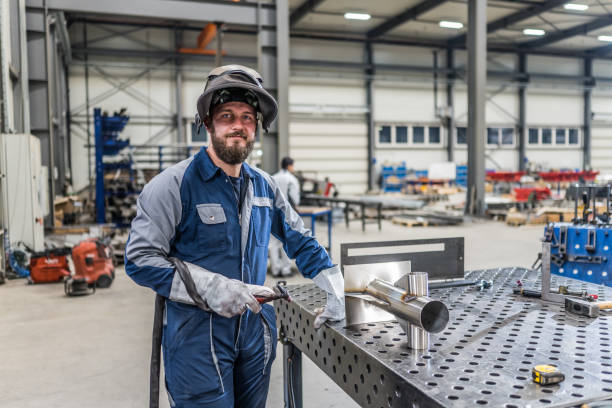
The first type of hidden harm: direct damage to the eyes and skin from ultraviolet rays.
Of all welding-related injuries, ultraviolet (UV) radiation is often the most underestimated, yet also the most destructive. Compared to UV radiation in natural light, the UV radiation generated by a welding arc is much stronger and acts directly on the human body over extremely short distances.
For the eyes, the most direct targets of ultraviolet radiation are the cornea and conjunctiva. Even short-term exposure can trigger photokeratitis, a type of damage that is noticeably delayed, often starting several hours after welding is completed. Symptoms include severe stinging, tearing, photophobia, and a foreign body sensation in the eyes; in severe cases, it can even prevent the eyes from opening.
Even more dangerous is that this type of damage is not always a one-off event. For people who work in welding for long periods without adequate protection, the cornea gradually becomes fragile through repeated repair processes, tear film stability decreases, and chronic dry eye and eye strain problems arise. This change is very slow and is often mistaken for a natural phenomenon caused by aging or excessive eye strain.
The effects of ultraviolet (UV) radiation on the skin should not be ignored. Prolonged exposure to the UV rays from welding arcs can lead to accelerated aging, pigmentation, and even localized burns on the face and neck. This explains why some experienced welders, without proper protection, may experience noticeable uneven skin tone or rough skin.
welding helmets perform the most basic and crucial protective task. Whether it’s a fixed-lens or auto-adjustable helmet, its core filtering material must continuously block UV rays under all conditions. If this layer of protection fails, all subsequent parameters and functions become meaningless.
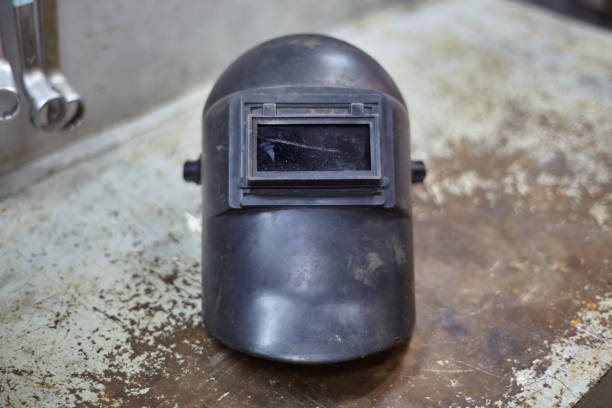
The second type of invisible harm: chronic heat damage caused by infrared radiation.
While the damage caused by ultraviolet radiation is often acute and painful, the effects of infrared radiation are more insidious and easier to overlook. Infrared radiation itself is not “blinding,” but the heat it carries can subtly alter the condition of eye tissues with prolonged exposure.
The primary effect of infrared radiation on the eye is through its thermal effect on the lens and retina. Unlike the cornea, these tissues have very limited self-repair capabilities. Once subjected to continuous stimulation, the damage is often irreversible. People who work in high-infrared radiation environments for extended periods are more prone to problems such as blurred vision, decreased contrast sensitivity, and weakened night vision.
These changes don’t usually raise alarm in the short term because they develop very slowly. Many welders only gradually find themselves struggling to see details after years of work, rarely attributing the cause to exposure from early welding work.
Infrared radiation can also affect facial skin and the tissue around the eyes, causing the local temperature to remain elevated for a prolonged period, thus accelerating skin aging. This type of damage does not cause obvious pain, but it will manifest as noticeable changes in appearance many years later.
welding helmets is similar to that of ultraviolet protection; it relies on the physical properties of the base filter material, rather than whether the lens darkens. This is why, even in the moment before the automatic light-adjusting process is complete, a properly made welding helmet can still protect the eyes from infrared radiation.
The third type of hidden harm: overload of the visual system by high-intensity visible light.
Compared to ultraviolet and infrared radiation, high-intensity visible light seems to be the most “obvious” risk, yet it is often underestimated as merely a temporary discomfort. In fact, the effects of continuous or repeated exposure to strong visible light on the visual system are far more complex than imagined.
The visible light intensity of a welding arc far exceeds the range to which the human eye adapts in natural environments. Under such lighting conditions, the optic nerve is forced into a state of high excitation for extended periods. If this state occurs repeatedly, it leads to a rapid accumulation of visual fatigue.
Visual fatigue is not simply a matter of “tired eyes.” It affects concentration, reaction speed, and judgment. This effect is particularly dangerous in welding operations, as welding is a delicate process that heavily relies on visual judgment. Once attention wanes, the risk of operational errors and accidents increases dramatically.
Prolonged exposure to high-intensity visible light can also affect the retina’s ability to adapt to changes in brightness. This can cause welders to become abnormally sensitive to changes in light shortly after leaving the welding environment, and may even lead to photophobia in daily life.
welding helmets in controlling visible light is not simply to suppress brightness, but to maintain a relatively stable and acceptable visual environment while ensuring safety. Lenses that are too dark force welders to get too close to the arc, while lenses that are too bright fail to effectively alleviate visual stress; neither is ideal.
Why must all three types of hidden damage be considered simultaneously?
Ultraviolet radiation, infrared radiation, and high-intensity visible light are not independent risks, but rather occur simultaneously and superimposed during the welding process. Protecting against only one of them often fails to truly guarantee safety.
For example, focusing solely on visible light brightness while neglecting the blocking of ultraviolet and infrared rays may provide a feeling of “clear vision and non-glare” in the short term, but it can create long-term health risks. Conversely, pursuing excessively dark lenses while ignoring visual comfort can also indirectly increase exposure risks.
a welding helmet lies in its ability to find a balance between these three types of hidden dangers, using a systematic protection logic to suppress the overall risk within a safe range.
A welding helmet is not simply a “covering tool”.
When we realize that the danger of welding arcs is not just the “brightness,” we discover that the role of a welding helmet is far more complex than we imagine. It is not just a black mask to cover the eyes, but a set of protective equipment that integrates materials science, optical design, and ergonomics.
It needs to block harmful radiation under any conditions, respond quickly to changes in brightness, and remain stable and comfortable during prolonged wear. These requirements collectively determine the design logic of the welding helmet and explain why a truly reliable welding helmet is often not the one with the most impressive specifications.
In conclusion: What’s truly dangerous is often the part you “can’t see.”
The brightness of the welding arc masks its most dangerous aspects. The invisible damage from ultraviolet rays, the chronic thermal damage from infrared radiation, and the long-term overload of the visual system by high-intensity visible light are the truly hidden dangers that need to be guarded against during the welding process.
a welding helmet is not to make welding “dull,” but to build a stable and reliable line of defense for the human body against these unseen risks. Only when we stop focusing solely on whether it’s “bright” or not, and instead understand the existence of these hidden dangers, can we truly grasp the importance of a welding helmet .